
GPS Interview
Jennifer Helsby
Software Engineer
MPA 2027, Brown University · October 5, 2026
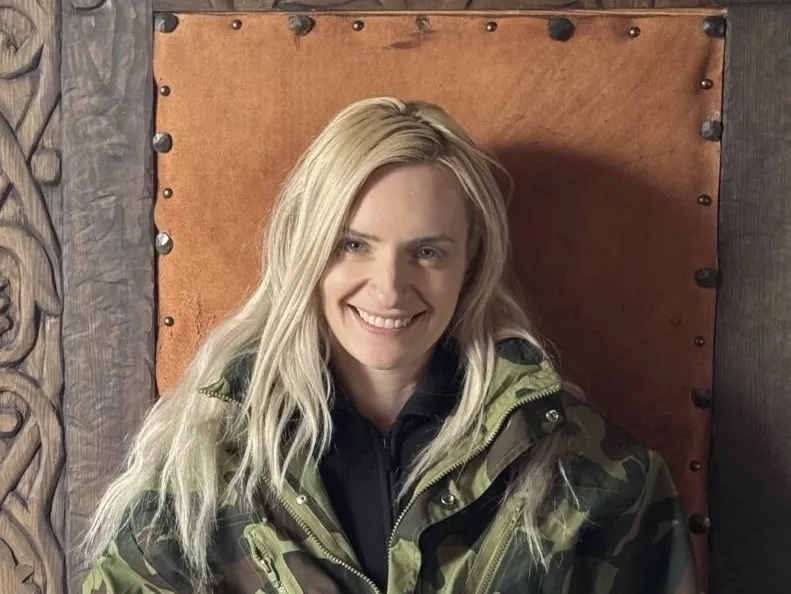
Dr. Jennifer Helsby is a software engineer, and researcher whose work focuses on digital privacy, applied cryptography, and press freedom. She currently serves as Chief Technology Officer at the Freedom of the Press Foundation, where she leads engineering teams developing technologies to protect journalists and their sources. Previously, she served as Lead Developer of SecureDrop, an open source platform used by major news organizations, including The New York Times and The Washington Post, to communicate securely with anonymous sources. She is also a founding engineer at Penumbra Labs and a cofounder and former Chief Technology Officer of Lucy Parsons Labs, an organization dedicated to police accountability and surveillance oversight. Helsby holds a PhD in astrophysics from the University of Chicago and has presented her work at major security conferences, including DEF CON and USENIX Enigma.
Helsby spoke with MPA students at Brown University’s Watson School on October 5, 2026. The conversation has been edited and condensed for clarity.
Q1What do you see as the biggest misconceptions protests organizers have about what digital privacy tools can and can’t do in terms of protecting them during very high-stakes situations such as a demonstration?
I think, like, a lot of the activist culture right now involves very large Signal groups; that’s something that we see a lot, and I think folks don’t spend enough time thinking about data minimization, so, like, with journalists on the border as well, this is something that we talk to them about a lot, like. Having a Signal group with hundreds of people, and yes, it’s end-to-end encrypted, but that is not going to protect you if even one of the folks in there has, you know, they might not be malicious, but their device might be taken, and it’s, you know, when you’re in a high-stress situation, you can understand why people may unlock their phone and give it to law enforcement, even though, you know, one should. If you can decline to do so, you should, but I think that’s a big struggle right now, especially with the impact of commercial spyware. If you don’t have the data, or you have really great policies around, like, setting a disappearing message time that is very short for all of your conversations, especially group conversations, if you’re doing organizing that is sensitive. So yeah, that’s one of the biggest things when it comes to digital security tools and protests and also borders, because some of the same concerns are there.
Q2What do you think is the biggest vulnerability when it comes to journalists facing today that technology still has not really solved?
The biggest issue is that every human communication, including that between an anonymous source or a source who wants to be anonymous and a journalist, is intermediated by some third party. Sources will reach out all the time on, you know, Twitter or X now, Messages, or other messaging services that really don’t provide much protection. And this has been the case for, you know, decades at this point. That’s why our organization was founded, and one of the first projects we worked on was to address this very problem: to try to get those communications to other platforms where the government must go to the organization in question, like the news organization. In terms of journalism, there used to be a fairly strong protection that, in the United States, journalists could use to protect their sources, which is if the government comes and asks you who your source is, you just refuse to tell them. That also has very serious implications, but you can protect your source that way. But more and more, as the decades have gone on and more and more surveillance power is in the hands of governments, they don’t need to go to the journalist to ask. They can get a court order or some other legal order to get that same information from a third party. And so, yeah, ideally, we want a situation where the government has to go to the news organization such that they at least know about it and can fight it, because many of these court orders also have gags associated with them, such that the third party, be it Twitter or whoever else, may not even be able to tell the journalist. So that’s definitely the biggest challenge, not to bring up AI, but for over a decade, a lot of privacy advocates have been saying, “Oh, we should resist surveillance, and you shouldn’t use surveillance as a government because it’s not effective, because you can’t sort through all of the data to identify folks. ” But more and more, that is not really a great argument, because that’s more of an argument to use a lot of AI to pick out the stuff that you’re interested in as a government. So it’s easier than ever before to sort through the large volumes of data that we know some federal agencies are collecting. So that, I think. Makes the problem much worse, but there are advantages for the defenders as well.
Q3Some authoritarian regimes filter the internet, while others shut it down completely. What technical or infrastructure factors determine which approach a regime takes?
For filtering the internet, they need to have, like, deep packet inspection technology. I mean, it’s not that expensive to buy this stuff, to buy, like, a box that will enable, you know, it’s like a few million dollars type of thing, to filter the internet. Or, I mean, it also enables you to do surveillance of the population. So, many authoritarian regimes are certainly using that technology, or it could be something more sophisticated, like in the case of the Great Firewall. Just shutting down the internet, obviously, is a very strong action, but if you’re worried about mass actions in the streets, then you can just tell all the internet service providers, or just, you know, turn off the cable landing points. Yeah, so I think there’s a bit more technical sophistication to filtering, because you need to do it at scale, but there are increasingly out-of-the-box commercial solutions that you can just buy if you’re one of these regimes to enable even that level of more sophisticated intervention.
Q4What role, if any, can the government play in protecting citizens in digital spaces without infringing on civil liberties? In essence, can the government be an ally, and can a healthy dynamic exist between cypherpunks and the state? If so, what does that look like?
I mean, it would be great if we had some privacy legislation in the United States. It would be great if, you know, whether through laws or, you know, rulemaking bodies, we banned stuff like the sale of data-to-data brokers. I think I’m not really sure of all the sort of political factors (I won’t speculate on those) that have led to not that much action in this area, but there are a ton of things that Congress or rulemaking bodies could do to provide stronger privacy protections for Americans. Like, Europe has done a lot more in this area, and for whatever reason, the United States is really far behind. And I do consider myself a cypherpunk, but I would certainly be in support of, you know, strong privacy legislation. There was a bill, it had bipartisan support in the last couple of years called the U.S. Press Act that we, at the Freedom of the Press Foundation, were trying to get passed. That it had bipartisan support until, I think, this Donald Trump fellow mentioned it on Truth Social, and then it was dead in the water, and that would have provided stronger protections for sources and journalists’ communications specifically, which, you know, at least is progress in one sensitive area, which would have also been great to see.
Q5How do you judge whether SecureDrop is actually protecting people? Have you ever found that any of your tools weren’t working as well as you’d hoped, and if so, what changes did you make?
We usually learn if people are using SecureDrop, so it’s free, it’s open source, you can go off and install it by yourself, and not tell us, and we wouldn’t necessarily know. We try to know as little as possible about what is coming through SecureDrop. So there are cases where the news organization has determined that, okay, we’re going to even say in the published story that this information came in through SecureDrop, and that is kind of done on a case-by-case basis. We are not aware of anyone who has used SecureDrop and been identified after the fact. One way we could learn about this is if, in an indictment, because there are many indictments of certain national security sources, we can look in the indictment to see at least what the government is saying about how they were caught. You know, I think it’s always good to be a little bit suspicious, in that if they did have some sort of, you know, new method to identify people, they might not put it in the indictment that’s public and would end up with, you know, a parallel way to get to that same sort of data that can be published in a public document. But yes, I think in terms of how sources get identified, at least for the people who really need SecureDrop, it’s usually much earlier in the pipeline; they’re sort of in the pipeline from, I think, something’s wrong in my organization to talking with a journalist. The first step doesn’t really have a great technological solution, which is getting the information out. So if you have raw documents that you need to get out from, like, an intelligence agency, it is very hard to do so without being identified. So it’s just a very difficult and fraught action, and you can only reduce so much of the risk. So we’re kind of addressing this second step, but organizations have responded by having way more endpoint monitoring of staff, such that, you know, as soon as you plug in a USB drive into that device, the administrators will know, and that is unfortunate. It’s also an understandable response. .
Q6Censorship-evasion tools like VPNs and Tor expand access to information, but in highly repressive environments, simply using them can make people more visible to the government. From your experience designing privacy-preserving technologies, how should developers balance making these tools widely accessible with protecting users whose use of them may attract scrutiny?
With Tor, any anonymity technology is relying on there being a large group of other people who you want to blend in with in, let’s say, your country. And you’re, you know, hiding in that cover traffic, so if you are one of 1 million people that day in your country who have accessed Tor. Okay, that might be a fairly large anonymity set. However, if you’re one of 10 people in your country that has accessed Tor directly that day, that’s not really providing any meaningful protection, and if you’re, one of these authoritarian governments that has spent $5 million on this magical box that can look at all network traffic, you can be trivially identified. For SecureDrop what we’ve done is look directly at the data. For Tor specifically, there are statistics on a country-by-country basis that are anonymized for how many folks are using Tor, and in environments where Tor usage is very low, SecureDrop is not really providing strong anonymity, and so we would recommend another tool in that case. One of the interesting areas of research I hope sees more effort is pluggable transports. So, for Tor specifically, there is another way to access the Tor network to sort of disguise your traffic so that it looks like something else. So instead of it being clear to a network observer, “Hey, I’m connecting to Tor,” it’ll look like you’re, you know, watching a YouTube video or something like this, which is fairly benign. And again, you could customize, like, you know, what site it was or what the traffic is based on the context, the local context. And that is potentially really powerful. There’s not sort of a default way to do that for all users, so for SecureDrop, we haven’t, like, recommended that people do that yet, but if that is something that was in widespread use, like, in a country, people are connecting, and in places where Tor is blocked, you kind of have to use that method to get on, so I think that is promising. Yeah, so traffic that sort of disguises either VPN or Tor traffic to look like something else so that it can bypass censors and also not be suspicious and stand out is, like, an area where there’s a lot of active privacy-enhancing technology research going on, and I think that is a good focus for the future..
Q7Technology keeps evolving, and we regularly see alarming statements from tech CEOs about their vision for the future. It worries me how normalized these reports have become. Is there a surveillance or censorship trend right now that worries you more than most people realize?
I think, the commercialization of surveillance technology over the last 10 years is very worrying, and I think, like, in the past few years, we’ve seen a lot more awareness about commercial spyware. Because, you know, it’s quite hard to defend yourself if someone is directly hacking into your devices. It’s expensive to do that, but still, just how widespread that technology has become is hard, because even though it’s rarely deployed in reality, it creates such a chilling effect, because it’s so hard to defend against it that people may feel, “Okay, I’m just not going to do anything; I’m not going to attempt to organize with my friends” or whatever type of action they were trying to do. And so I think, you know, kind of helping people calibrate their risk relative to what they’re trying to do and helping them threat model is really important. But yeah, I think that trend is definitely the most worrying thing. I mean, the commercialization on all levels, from the surveillance boxes that are sold to governments to the commercial spyware that’s sold to, you know, anyone who’s willing to pay. That’s just happening more and more, and I think, you know, the current administration has rolled back some of the rules that were put in place by the previous administration to prevent those technologies from being used in this country, and I think that’s a real shame.