Lynette Wallworth
Artist and filmmaker
MPA 2026, Brown University · April 12, 2026
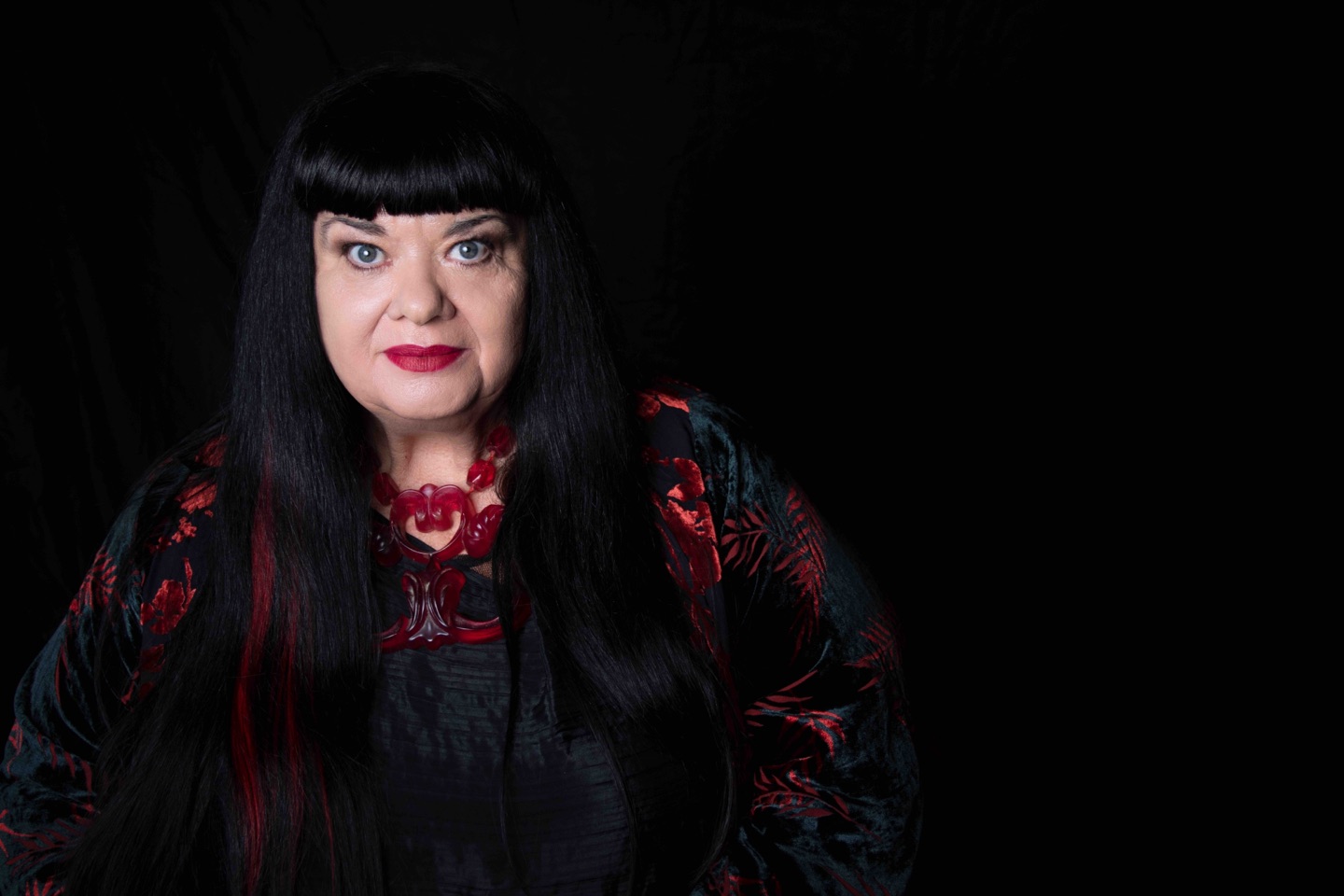
Lynette Wallworth is an Australian artist and filmmaker renowned for creating profoundly empathetic works while pushing the boundaries of emerging technologies, working across 360 film, virtual reality, interactive video, digital full dome, and feature documentary. Her work, which reflects on the connections between people and the natural world, has received multiple international awards, including News and Documentary Emmy Awards for her virtual reality narratives Collisions (2017) and Awavena (2020).
Wallworth spoke with students in Digital Peacebuilding at Brown University’s Watson School on April 12, 2026. The conversation has been edited and condensed for clarity. All seven questions from the conversation are included below.
Q1Why did you first decide to incorporate VR into your documentary work?
Sundance offered me their first residency in live-action virtual reality when that technology had just emerged. The rules at that point were: this work can’t be longer than ten minutes, you can’t transition between scenes, you can’t move the camera. The people who gave me the residency said, “See if you can break every rule, come back to us with what you do.” And that’s how Collisions got made. Later, an Amazonian chief, Tashka Yawanawa, saw Collisions at a gathering, took off his headset, and said: I understand this technology. It acts like visioning medicine. It opens a portal. It carries you without your body to a place you’ve never been. We can use this. My friend, you’re going to have to come to the Amazon. We have a story we would like to send out.
Q2Collisions was screened for a UN eminent persons group headed by Hans Blix in Vienna. What does it mean to you when your art enters diplomatic or policy spaces?
We got this message: pick up all the headsets, carry them into this room. In this room were seventeen men sitting on big swivel chairs discussing the nuclear safety of the world. Collisions tells the firsthand story of Nyarri, a Martu man who witnessed a nuclear test in the Australian desert with no contact with Western culture at all. He told me, “We thought it was our gods rising up to speak with us. We saw that our gods had made all the kangaroos fall down on the ground as a gift, we thought, of easy hunting. So we took those kangaroos, and we ate them, and the people were sick, and the spirits left.” When I took the headset off Hans Blix, I asked why it was important for the people who are meant to know most about nuclear testing to see a work such as this. He said, even for people like us, a nuclear test is still an abstract concept. What I know is that those men, after that moment, had an emotional response to the notion of nuclear testing, whereas before, what they had was an intellectual response.
Q3Research supports intergroup contact as a vehicle for reducing prejudice, but it carries risk if not managed with care. How have you used immersive storytelling to reduce prejudice while keeping the risk of harm low?
Primarily, I don’t go unless I’m asked. And to be honest, I’m not focused on reducing prejudice. My work comes from invitation, then from longstanding relationship, which is why I’ve done three works with the Martu and two works with the Yawanawa. When we were preparing Awavena, I was worried about placing a 360 camera in front of the Yawanawa’s old shaman, Tata, while he was in ceremony. I asked Tashka on a phone call, how will it be for him? There was complete silence on the other end. Then Tashka said: “Lynette, when Tata prays, he prays first for the person in front of him. Then he prays for the community. Then he prays for the forest. Then he prays for you, everyone beyond here. He’s always been praying for you. Maybe you didn’t know that.” There’s a nugget in there that my whole work is about. It’s not about prejudice. It’s about our unknowing, our assumptions, our thinking that we can observe something or read about it and know it. My work is based on relationship.
Q4What technological innovations do you want to incorporate into your future work, and how might that change your approach to storytelling?
I’m never driven first by the technology; I’m always driven by the story, and the story takes me to the audience. That’s why I work in different forms depending on the story. I’m not afraid of exploring new technology. I’ve worked with it enough to know it’s very difficult, and you have to accept it’s going to fail you. It’s as precarious as when Leonardo da Vinci first used oil paint in the Last Supper and had the wrong ground underneath it, and the paint started to deteriorate from the moment he’d finished the work. New technology is always buggy. It’s worth it if it can achieve something that you can’t achieve with any other form. I can tell you what I noticed: when heads of state or heads of industry are in the headset, they can’t look at their phone, they can’t be checking the watch, and their minder can’t get to them. You actually have them locked off for fifteen minutes or so in an experience that could be incredibly impactful. That is useful. I just recently finished a feature documentary, and I went to that form because the audience for this work was broad, would not necessarily have technology, and I wanted to make it accessible to the widest possible audience.
Q5Where do you see immersive technologies going in the next five to ten years in terms of social impact?
I honestly don’t know. The uptake on headsets has never been what people expected, and I don’t know that we’re going to want more social isolation. I think we are more likely to see far greater development in AR than VR, because it allows us to stay in our own environments while layering on information. My first AR work, in 2011, paired images of coral with NOAA satellite observations, so when you looked through the app, it showed you where corals around the world were at risk of bleaching in that moment. Something that can keep you connected to a thing you have come to care about: that is what AR can do, and that’s why I think AR might be where we see the biggest leaps.
Q6What do you think is your proudest piece of work so far?
It’s not a kind of concept I have. Collisions had the most impactful trajectory, and it was gratifying to see it invited into these corridors of power. Not from my perspective, but from Nyarri’s. He had frequently stood up in his community and said that one day he was going to tell this story to the world. Nyarri left Australia for the first time to travel to Davos, so that when those world leaders and heads of industry took their headsets off, there was this man standing in front of them, paying testament to his own story and what he saw. So I can’t say I’m proud. I can say I’m grateful. It’s a revelation to see how being able to give someone an experience they can only imagine can change thinking very quickly.
Q7What is the story that you want to tell, and how are you working towards it?
Actually, this last film is the story I really wanted to tell. It was about a trial in Australia for people in palliative care or with a terminal diagnosis, using psilocybin to help with the anxiety of approaching death. These doctors are using an ancient medicine that’s been used by Indigenous practitioners for many, many generations, and I wanted to thread these knowledge systems back together, not just around the usage of these medicines but around understandings of what end of life is. Two of the people I filmed died. It’s a challenge as a documentary maker to form relationships with people, have them confide their thoughts to you, and know that they’re gifting these last days and months into a work because they believe the subject matters. That work was a long-held goal for me, because I’ve done several works now about end of life. And I think it’s one area in Western culture where we are particularly devoid of ceremony that is meaningful and helpful around grief. And so that’s the one I’ve just finished.